

Living in Central Texas means coexisting with some of the most erratic weather patterns in the United States. Our homes are subjected to a relentless cycle: the searing, UV-heavy heat of a July afternoon, the sudden 40-degree temperature drops of a winter “Blue Norther,” and the violent, moisture-laden thunderstorms of the spring. In this environment, a professional siding installation isn’t just about curb appeal—it is an engineering feat designed to protect your home’s skeletal structure from the elements and prevent costly repairs.
However, many homeowners treat their siding as a “set it and forget it” feature. They might be diligent about catch basin cleaning to prevent yard flooding or stay on top of roof inspections after a storm, but they often ignore the vertical surfaces of their home. This is a dangerous oversight. In the Hill Country, siding failure rarely happens as a single, catastrophic event. Instead, it is a “slow burn” of cumulative damage. A tiny hairline crack or a single loose trim piece might seem insignificant today, but in the humid, high-pressure environment of the I-35 corridor, these minor flaws are the seeds of costly repairs.
The Quick Edit: Key Takeaways
Before we explore the mechanics of structural rot, let’s establish the 2026 baseline for Texas home maintenance:
- The 48-Hour Rule: In our high humidity, trapped moisture can begin breeding mold and mildew behind your siding in less than two days.
- Thermal Stress: Texas siding expands and contracts more than in almost any other region, meaning joints and caulking are under constant physical tension.
- Invisible Impacts: Hail doesn’t have to “shatter” a panel to destroy its functionality; microscopic fractures are often the most dangerous.
- Proactive Protection: Small fixes in 2026 prevent total envelope failure in 2028.
The Hail Hangover: Hidden Fractures and Impact Damage
Central Texas is the heart of “Hail Alley.” While we all fear the grapefruit-sized stones that make national news, it is the smaller, golf-ball-sized hail that causes the most insidious damage. When hail strikes your home, it can create what experts call “star cracks” or “bruises.”
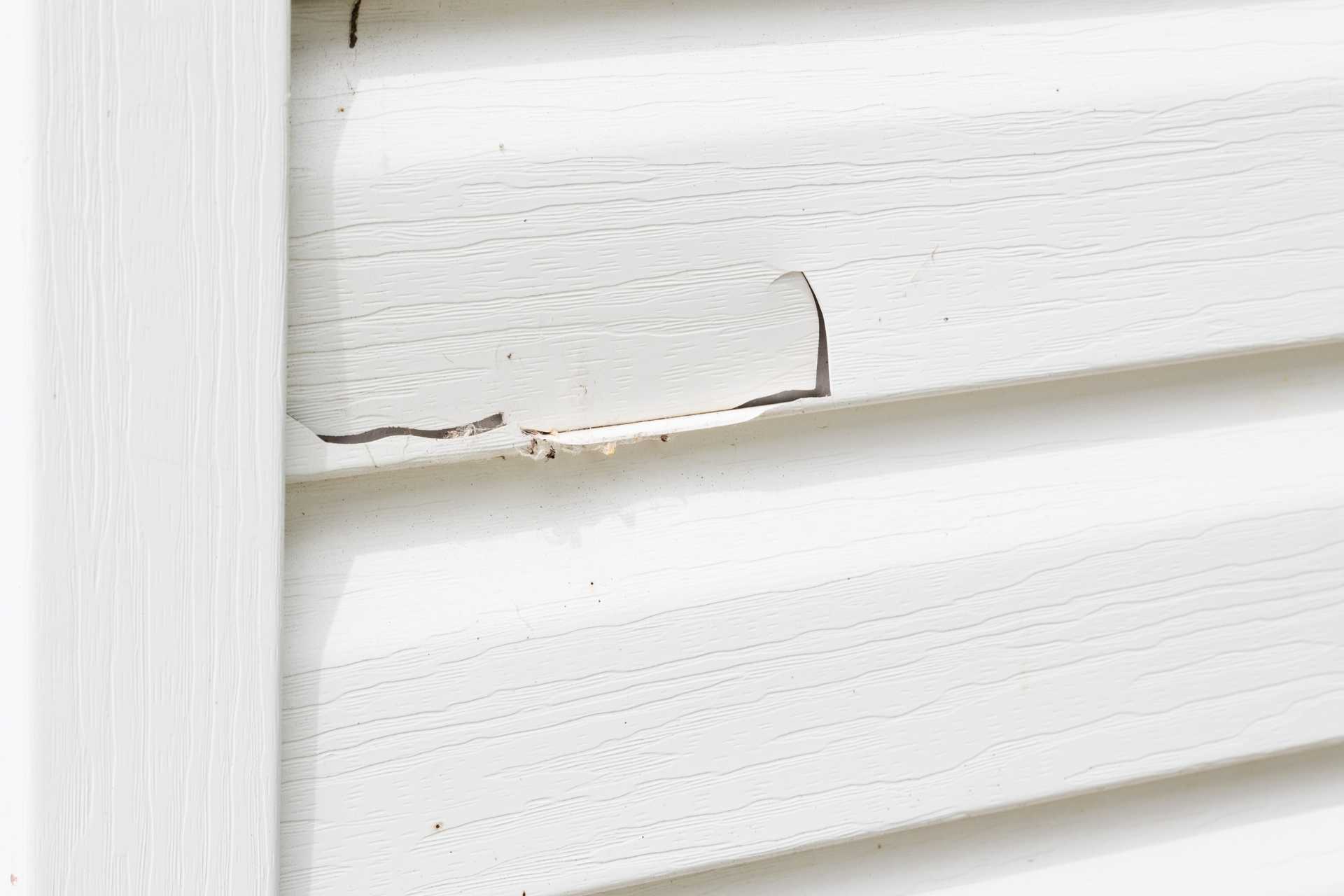
If you have older materials, you might see clear vinyl siding damage in the form of chips or holes. However, on more modern fiber-cement or premium composite siding, the damage might look like nothing more than a small scuff. Under a magnifying glass, however, that scuff is often a network of microscopic fractures. These cracks break the factory seal of the board. The next time a Texas “gully washer” hits, wind-driven rain is forced into these fractures. The water hitches a ride directly to the OSB (oriented strand board) sheathing underneath. Once that wood gets wet, it swells, loses its structural integrity, and begins the expensive process of rotting from the inside out.
Heat and Humidity: The “In-and-Out” Expansion Cycle
Our sun is a relentless adversary. The intense UV radiation in Austin and San Antonio eventually leathers the resins in your siding, making it brittle. As the material loses its flexibility, it can no longer handle the thermal expansion caused by our massive temperature swings. You may notice your siding “buckling” or “waving” on the western-facing side of your house.
This warping creates gaps. In the early morning, when Central Texas humidity often hits 90%, that moisture-heavy air seeps into these gaps and condenses. Because the sun then heats the exterior of the board, it creates a “greenhouse effect” behind your siding. This trapped, hot moisture is the perfect environment for black mold. Remember: the siding is your home’s first line of defense against the elements, but if the defense is warped, it actually becomes a trap that accelerates the destruction of your wall studs.
The “Small” Red Flags: When to Call an Expert
You don’t need to be a structural engineer to spot the early warning signs of trouble. Often, the most expensive repairs start with a failure of the “connective tissue” of your home’s exterior.
Check your caulking around window frames and door trim. In the Texas heat, standard caulk can dry out and shrink in as little as three to five years. A $10 tube of failed caulk is the leading cause of window-frame rot. Similarly, look for “chalking”—if you run your hand across your siding and it comes away with a white, powdery residue, the protective finish has failed. This means the board is now porous and absorbing water like a sponge. If you notice “chatter” (siding that rattles in the wind) or popped nails, it means the fasteners have pulled out of the underlying wood, likely because the wood is too soft to hold them. This is a clear signal to call a professional siding contractor for a thorough inspection before the next storm season arrives.
The Financial Fallout: What Happens Behind the Boards?
The difference between a “repair” and a “restoration” is often a matter of months. Replacing a few damaged siding panels might cost a few hundred dollars. However, if water has reached the house wrap and the sheathing, you are looking at a full-scale construction project.
In 2026, the cost of building materials and labor has made structural remediation significantly more expensive. Replacing rotted OSB, treating for mold, and potentially replacing saturated insulation can turn a minor exterior touch-up into a $15,000 to $20,000 nightmare. Furthermore, compromised siding is a “welcome mat” for Texas pests. Termites and carpenter ants are highly attracted to the softened, damp wood behind failing siding. By the time you see the pests inside your home, the structural damage is usually extensive. Neglecting these minor issues can also lead to denied insurance claims, as many policies have exclusions for “gradual seepage” or “lack of maintenance.”
Protecting Your Texas Fortress
In the Hill Country, we take pride in our homes, but we must also respect the environment they sit in. The intense weather cycles of Central Texas demand a higher standard of vigilance. Whether you are looking to sell your home soon or you plan to stay in your “forever home” for decades, the health of your siding is the primary factor in your home’s longevity.
A yearly professional walk-through is an investment in your financial security. By catching a small hail bruise or a shrinking caulk line early, you are saving yourself from the structural and financial fallout of a total envelope failure. Don’t wait for a watermark on your interior drywall to realize your exterior has failed. Protect your fortress, respect the Texas sun, and ensure your home remains a safe haven for generations to come.