

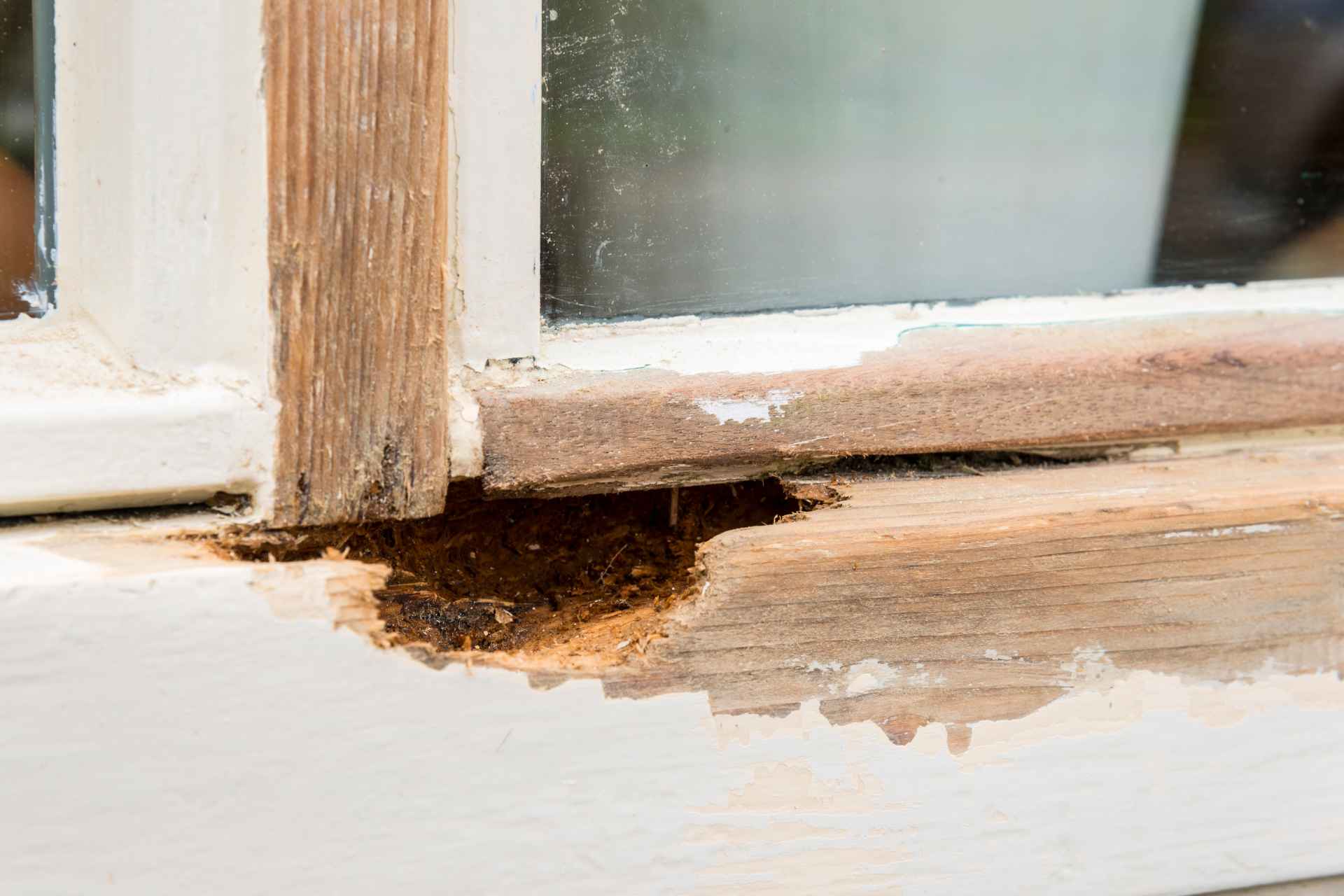
Central Texas presents a unique set of environmental challenges for residential building envelopes. Homes across the region must endure blistering summer heat, relentless ultraviolet radiation, high humidity, and sudden, torrential flash rainstorms. While homeowners often focus on keeping their air conditioning systems running efficiently through intense triple-digit heatwaves, the structural wood framing surrounding their windows quietly bears the brunt of seasonal weathering. When moisture penetrates exterior trim and sills, soft wood rot sets in—silently compromising structural integrity behind wall cladding.
Ignoring early warning signs of wood frame rot can lead to extensive structural damage that spreads far beyond the window casing itself. While patching soft spots or applying cosmetic paint might hide surface discoloration temporarily, ignoring deep structural decay eventually forces homeowners into an extensive window replacement project to repair compromised wall studs and headers. Understanding how moisture, heat, and fungal decay interact allows property owners to take decisive action before minor window frame rot transforms into a major structural emergency.
The Quick Edit
- The Primary Catalyst: High humidity combined with scorching solar heat accelerates wood-decay fungi, turning solid pine window frames soft and spongy.
- The Pest Threat: Rotted, damp wood creates an ideal entry point and habitat for destructive wood-boring pests like subterranean termites and carpenter ants.
- The Structural Solution: Removing compromised wood and transitioning to modern, non-porous frame materials permanently stops moisture intrusion and protects wall framing.
The Central Texas Climate Engine: How Heat and Moisture Fuel Wood Rot
Wood rot is not simply old wood falling apart; it is an active biological process driven by wood-decaying fungi. For these microscopic organisms to thrive and consume wood fibers, four environmental conditions must be present simultaneously: oxygen, favorable temperatures, a food source (cellulose), and moisture.
Central Texas provides the perfect natural incubator for fungal decay. During humid spring and summer months, brief torrential downpours saturate exterior window sills, brick ledges, and wood trim. When intense solar heat hits the wet wood immediately after a storm, trapped moisture gets baked inside the frame members.
Once the moisture content inside pine or Douglas fir framing exceeds 20%, fungal spores activate. These organisms secrete enzymes that break down lignin and cellulose—the structural polymers that give wood its density and strength. As the cellular structure breaks down, once-solid window sills become soft, discolored, and crumbly, losing their ability to hold fasteners or support heavy glass units.
Early Warning Signs of Window Frame Decay
Identifying window rot early keeps structural repair costs manageable. Because decay often begins underneath paint layers or along lower sill joints, recognizing subtler indicators is crucial for proactive home maintenance:
- Soft or Spongy Wood: Gently pressing a screwdriver tip against the lower sill, exterior casing, or corner joints reveals decay. If the tool sinks easily into the wood without resistance, active rot is present.
- Peeling, Bubbling, or Cracking Paint: When moisture gets trapped inside wood framing, solar heat turns that water into vapor. The expanding steam pressure pushes outward, causing exterior paint to bubble, crack, and flake off.
- Sticking or Binding Window Sashes: As wood fibers rot and absorb water, they swell significantly. This dimensional expansion causes window sashes to bind against the jambs, making them difficult to open or lock.
- Dark Stains or Fungal Growth: Dark brown or black water rings along lower interior trim or actual mushroom-like fruiting bodies growing along exterior sills signal severe advanced decay inside the wall cavity.
The Pest Connection: How Rotted Frames Attract Termites and Ants
Beyond structural wood failure, rotted window frames create a dangerous biological highway for destructive pests. Central Texas is home to aggressive populations of subterranean termites, Formosan termites, and carpenter ants. These pests actively seek out damp, softened wood to build colonies and nest.
Sound, dry hardwood is difficult for insects to bore through quickly. However, wood softened by fungal rot provides an easy, low-resistance path for pests to enter your home. Subterranean termites construct mud tubes up foundation walls directly toward damp window sills, using the soft wood as both a food source and an entry point into interior wall studs.
Once termites or carpenter ants establish a bridgehead inside a rotted window frame, they spread rapidly through adjacent wall framing, electrical pathways, and floor joists. What began as a localized moisture leak around an unsealed window sill can quickly escalate into thousands of dollars in hidden structural pest damage across the building envelope.
The Mechanical Pitfall: Quick Fixes vs. Real Solutions
When faced with soft window sills, many homeowners attempt temporary cosmetic patches using wood fillers, exterior spackle, or fresh coats of latex paint. While these surface repairs might temporarily hide unsightly soft spots, they fail to fix the underlying biological problem.
Relying on superficial patches to solve deep structural decay is similar to taking a severely damaged exhaust system to a neighborhood muffler shop for a quick weld when the entire undercarriage framework is rusted through; a surface patch might quiet the symptom briefly, but it ignores the fundamental structural failure happening beneath. Applying filler over active rot traps remaining moisture deeper inside the wall cavity, creating a dark, enclosed environment where fungal decay and subterranean termites accelerate behind fresh paint.
When wood-decay fungi have compromised the structural density of a window frame or rough opening, complete removal of the damaged material is the only permanent solution.
Material Evolution: Upgrading to Non-Porous Frames
Stopping window rot permanently requires breaking the moisture-cellulose cycle. Replacing old, high-maintenance wood frames with modern, hydrophobic building materials ensures that fungal decay can never take root in your window openings again.
Upgrading to synthetic frame materials offers complete immunity to rot and insect infestation. Modern engineered vinyl and advanced composite window frames are entirely non-porous. They do not absorb moisture, swell during flash rains, or degrade under extreme solar UV exposure.
When evaluating materials for long-term climate resilience, vinyl windows are also a good option to consider for modern homes across Central Texas. High-grade vinyl frames feature multi-chambered internal profiles that deliver high thermal insulation while eliminating the need for scraping, sanding, or repainting exterior trim ever again.
Flashing, Drainage, and Professional Installation Integrity
Selecting a durable, rot-proof window material is only half the solution; proper installation and flashing integration dictate whether your wall remains dry over time. Even the highest-grade window unit will leak if water manages to bypass exterior flashing seals.
Proper window replacement involves establishing a continuous water-resistive barrier (WRB) around the rough opening. Installers apply self-adhered flashing tape along the window sides and header, overlapping layers in a shingle-style pattern so that gravity directs water away from wood studs.
Crucially, the rough opening sill must be sloped outward and fitted with a rigid sill pan. This ensures that any wind-driven rain penetrating exterior trim gets funneled safely back outdoors through dedicated weep channels rather than pooling under the frame.
Because managing flashing integration, house wrap overlaps, and perimeter masonry joints requires precise building science knowledge, ensuring professional window installation is a good investment for long-term property protection. Experienced installers verify that every flashing layer interacts correctly with your home’s exterior cladding—whether brick, stone veneer, stucco, or fiber cement—preventing hidden water intrusion before it starts.
Financial Analysis: The True Cost of Patching vs. Replacing
Deciding whether to continue repairing old, rotted windows or replace them entirely comes down to evaluating long-term lifecycle costs. Continuous maintenance on aging wood fenestrations creates a recurring financial drain with diminishing returns.
Continuing to scrape, fill, seal, and repaint decaying wood frames every couple of years yields brief cosmetic improvements while air leaks and high thermal conduction persist. Furthermore, unaddressed wood decay increases the risk of costly interior wall repairs, mold remediation, and professional pest extermination calls.
Building science and financial realities demonstrate that maintaining old windows can be more expensive than fully replacing them over a home’s holding period. Investing in modern replacement windows stops recurring repair bills, lowers monthly summer cooling costs by blocking solar heat gain, protects your home’s structural framing from pest invasion, and significantly boosts overall property resale value
Protecting Your Building Envelope
Window frame rot in Central Texas is a serious structural issue driven by extreme heat, high seasonal humidity, and biological decay. Left unaddressed, soft wood frames invite water deeper into wall cavities and attract destructive pests like subterranean termites and carpenter ants. While temporary patches may mask the problem briefly, complete removal of decayed wood and upgrading to rot-proof vinyl or composite frames provides permanent peace of mind. Investing in high-performance materials and professional installation protects your home’s framing, improves energy efficiency, and secures your property investment for decades to come.